


Incident evidence earns management support; a proposed process alone rarely does. To get buy-in for a new RCA process, connect recurring problems to reliable evidence, clear recommendations, and the outcomes leaders care about. Show how reports, logs, interviews, and performance metrics support the analysis, then make the case for a consistent process.
Expect questions about effort, ownership, and practical value. Address them directly: explain how the process will help teams understand what happened, identify contributing causes, and track corrective actions without making RCA an isolated specialist task.
Build an evidence-based case, present recommendations in terms management can assess, and secure approval for a process people can use consistently. Make the next steps clear so support can move from agreement to implementation.
Key Takeaways
- Build the case for RCA around recurring operational problems and the outcomes leaders need to improve.
- Invite colleagues to challenge assumptions so recommendations reflect evidence from more than one perspective.
- Bring incident reports, logs, interviews, and performance metrics together to support a clear account of what happened.
- Use a consistent, guided RCA approach to help teams turn incident evidence into structured findings and corrective actions.
Communicating and approving recommendations
Use a consistent method to connect incident evidence with decisions. A six-step RCA process can guide teams from defining the problem to implementing a solution.
-
Address Employee Concerns and Encourage Collaboration
Explain that RCA examines how and why an event happened, not who should be blamed. Separate learning from accountability: document evidence and assign clear owners for corrective actions without treating participation as an admission of fault. Invite employees to challenge assumptions, since their input can reveal contributing factors an initial review missed.
To encourage collaboration, share the event timeline before discussing causes and ask participants to correct factual gaps. For example, an IT support employee may clarify when a service alert appeared, helping the team distinguish a contributing condition from the root cause.
-
Plan Training and Change Management
Give employees practice with the selected method, reporting template, and process for recording evidence. A standard summary form can organize findings into three columns: causal factors, root causes, and recommendations. Use a realistic incident example so participants can practise each step and understand what a complete analysis requires.
To support adoption, explain the organizational direction, show how RCA supports it, and make each person’s role clear. Communicate the process before launch, gather employee questions, and use feedback to address obstacles. Training should equip people to complete an analysis, while accessible resources help them apply the same approach to future incidents.
-
Communicate Findings and Secure Approval
Present management with a concise chain from performance gap to contributing factors, root cause, and recommendation. This helps leaders see how the evidence supports the proposed action. For example, link a recurring service disruption to its documented cause, then explain how the recommended change could prevent a repeat.
Ask leaders to approve specific actions, assign owners, and set review points. Track whether each recommendation was completed, followed, and effective. This makes approval operational: the organization can see what changed and whether the action addressed the cause.
How to Gain Management Buy-In for Root Cause Analysis?
To get buy-in for a new RCA process, present a practical plan: gather complete evidence, involve colleagues, and test the approach through a focused pilot. Explain what the pilot will examine and how its findings will inform a decision about wider use.
-
Gather Colleague Input
Ask colleagues from affected teams to review the evidence and challenge assumptions before identifying a root cause. Their experience can reveal missing context or symptoms mistaken for causes. Compare methods against the incident: 5 Whys traces a chain of questions, a fishbone diagram organizes contributing factors, and fault tree analysis maps combinations of conditions. Select the method that fits the problem and available evidence.
-
Identify Stakeholders and Decision-Makers
Identify who experiences the problem, provides relevant data, owns corrective actions, and approves changes to priorities or resources. Include those roles in the review, then identify the leader authorized to approve the process. Record responsibilities so evidence requests and decisions have clear owners.
-
Pilot the Process and Measure Results
Choose a recurring issue with accessible reports, logs, interviews, and performance metrics. Collect complete investigation data, since gaps can weaken the analysis. Record the effort required, recommendations made, and whether actions were completed. Track whether the issue recurs, then present the findings to management to inform the next decision.
-
Assess Risks and Barriers
Address barriers before rollout to get buy-in for a new RCA process. Staff may fear blame, lack time to gather evidence, or struggle with inconsistent methods. Clarify the process, assign evidence-gathering responsibilities, and explain how findings guide action. Avoid promising outcomes the pilot cannot demonstrate.
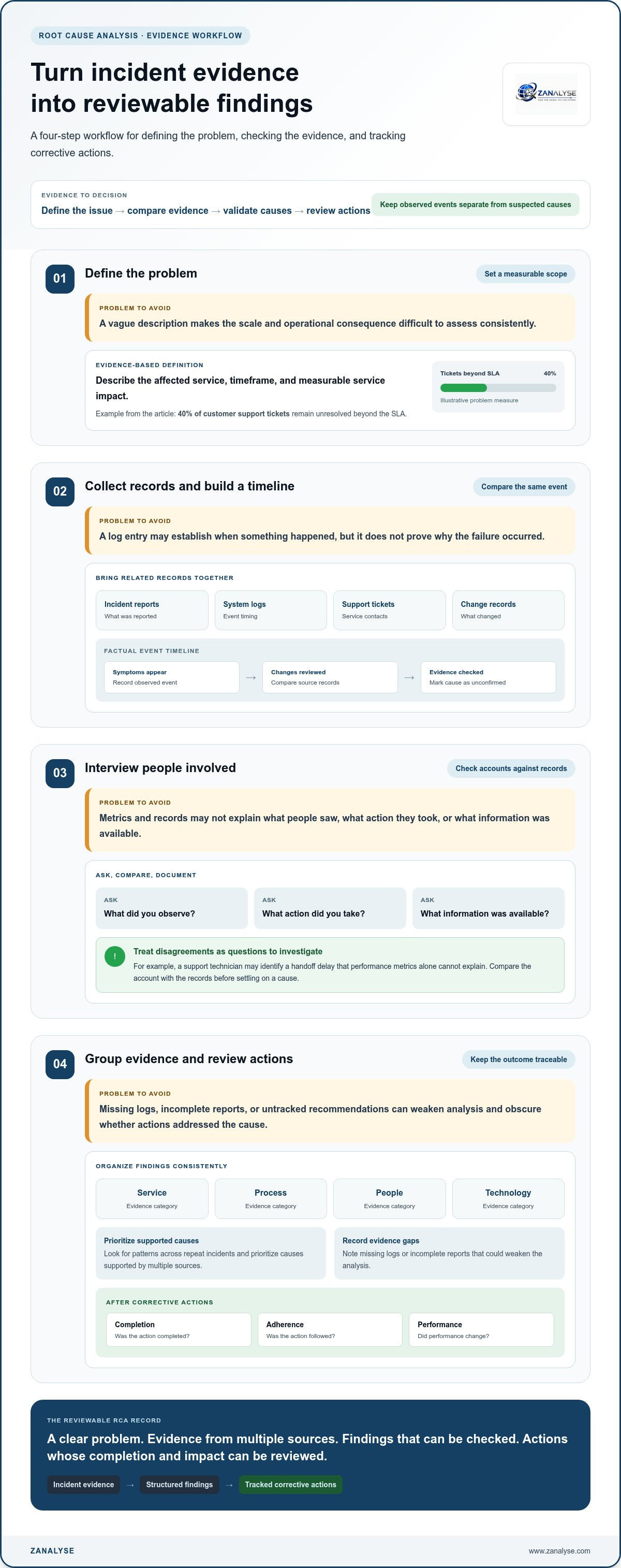
Explore a structured RCA workflow to organize incident evidence and produce consistent analysis.
Using incident reports, logs, interviews, and performance metrics
- Define the problem using an incident report and a measurable service impact. For example, frame the issue as 40% of customer support tickets remaining unresolved beyond the SLA. Record the affected service, timeframe, and operational consequence so stakeholders can assess the challenge consistently.
- Collect related records before drawing conclusions. Compare incident reports with system logs, support tickets, change records, and performance metrics for the same event. Build a factual timeline, noting when symptoms appeared and what changed. Keep observed events separate from suspected causes: a log entry can establish timing without proving why a failure occurred.
- Interview people who experienced or responded to the incident, then compare their accounts with the records. Ask what they observed, what action they took, and what information was available at the time. For example, a support technician may identify a handoff delay that metrics alone cannot explain. Document disagreements as questions to investigate, not settled causes.
- Group evidence into consistent categories, such as service, process, people, or technology. Look for patterns across repeat incidents, then prioritize causes supported by multiple sources. Note gaps that could weaken the analysis, including missing logs or incomplete reports. After corrective actions, track completion, adherence, and whether performance changed. This creates a reviewable record of effort and outcome.
Explore a structured RCA workflow to organize incident evidence and produce consistent analysis.
ZANALYSE: ZANALYSE Standard License
ZANALYSE Standard License offers a consistent way to turn incident evidence into RCA findings. The browser-based platform guides users through established analysis techniques and generates structured reports from logs, timelines, and incident data, including evidence, confidence scores, and corrective actions.
The platform helps problem managers, IT support teams, and service providers make problem management more accessible across their organization. Use its reports to present findings clearly, support recommendations, and retain an audit trail of the analysis and corrective actions. ZANALYSE also offers a Full License, annual or multi-annual price plans, and RCA Capacity Top-ups.
Contact ZANALYSE to discuss using the platform for your RCA process.
Turn Approval Into a Repeatable Practice
Treat approval as the beginning, not the finish. Give the process an owner, make its use part of routine problem management, and schedule regular reviews of whether recommendations are being implemented. This keeps the work connected to operational decisions instead of leaving findings in a report.
Start with the next incident your teams can examine consistently. Use the analysis to refine the process, clarify responsibilities, and keep leaders informed about progress. A steady review cycle helps RCA become a shared organizational practice rather than a one-time initiative.
Contact ZANALYSE to discuss RCA and consider how structured analysis can support your next step. With clear ownership and continued attention, your organization can build lasting support for better problem management.
Frequently Asked Questions
How can you explain the business case and benefits of a new RCA process?
Frame the business case around a recurring operational problem, not a request to adopt a framework. Connect a specific service issue to its effects on customers, delivery commitments, and team capacity. Then explain how structured investigation could improve decision-making. Ask leaders to approve a defined pilot, assign ownership, and agree on the evidence they will use to assess wider adoption.
What evidence and metrics help demonstrate the need for a new RCA process?
Use incident recurrence, affected services, restoration time, escalations, and effort spent on workarounds to make the problem visible. Compare similar periods or services, accounting for differences in activity so the comparison is meaningful. For teams operating across Canada, Australia, and Europe, note whether time zones or handoffs shape the pattern. Pair each metric with a concrete incident record.
How should leadership communicate and reinforce a new RCA process?
Leaders should explain why the process is changing, what teams are expected to do, and how findings will inform decisions. Reinforce the message in routine team briefings and operational reviews, not only at launch. Managers can model the practice by asking what the evidence shows and whether agreed actions are progressing. Consistent follow-through makes the process part of normal work.
Disclaimer
Some content on this website may be generated or assisted by artificial intelligence. While we strive to ensure that all information is accurate, relevant and up to date, AI-assisted content may contain errors or omissions. Content should therefore be considered informational and not as professional advice.


